Thursday, September 24, 2015

The Madness of Bureaucrats

I've been on a bit of an anti-government rant lately, and I feel I am just getting warmed up, so will continue with the theme, and throw in a bit of big business bashing for good measure - which is always worth the effort.

Electricity prices are very high Down Under. My previous home town was Nelson, BC. Nelson lies in the heart of the interior rain forest, with plenty of hydroelectric power generation nearby; electricity rates were raised in 2014 to $0.09/kWh. In contrast, I've spent the last 5 months near Hobart, Tasmania. Tassie also has lots of mountainous temperate rainforest and hydro power - in excess of state demand in good years. That's where the similarity with BC ends however: Tassie skiing sucks, and peak electricity rates are $0.26/kWh.Yes, really, three times as much as in BC. I don't know what the Aussies have done, but they've sure made a real cock up of it.
Oz, however is blessed with remarkable renewable energy resources. When considering full-cycle project costs, wind power generation has been cheaper than fossil fuels for some time, and now photovoltaic (PV) solar is too (2, 3). Recently, the investment bank Deutsche Bank predicted that solar systems will be at grid parity in up to 80 per cent of the global market within 2 years, and is already there in Australia (4).

Wind generation capacity has been increasing 25% per year for the past decade, and now generates 2.5 GW, enough to power a million homes. Currently planned projects will increase this by 500% (1).
Australia was a bit slow to get going with the PV solar thing, but lately have been making up for lost time. Installed PV solar has increased by a factor of 20x in the past 5 years, with 4.1 GW of capacity having been installed on over one million household rooftops by the end of 2014, making the per capita rate of solar installations in Australia one of the highest in the world (5).
Australia is on the cusp of a major shakeup in energy generation and production. Wind power is big, and despite Tony Dinosaur Abbott's preference for clean coal over wind turbines, will only get bigger. But from an electrical distribution perspective, I think the big disrupter will be household solar. Today, in most places in Australia, it is cheaper to put some solar panels on your roof and some big batteries in your garage, than it is to buy your electricory off the grid (amortize over 10 years, say). Amazing. I, for one, am not interested in investments in Australian electrical utilities. I think we're going to see a classic case of "disruptive innovation" play out in a very public way in this land down under. It is no coincidence that one of Tesla's first moves outside of the US for its Powerwall home battery system is to Oz, with availability later this year (6).

This is all good, and progressive government regulation has supported the uptake of alternate energy in recent years. But it is high time to get back to my promised froth.

Now that the electrical utility companies are about to take a serious shot between the eyes with a ball peen hammer, they are starting to wake up to the risks. And the natural reaction of any large organization, when faced with economic challenges, is to lobby the government for some protective legislation. And for the Queensland electrical utilities, the Queensland Competition Authority has been very obliging. In recent years Queensland has had a program offering generous feed-in tariffs for households feeding solar energy into the grid, and this gave the PV movement in Queensland a big boost. However, the Queensland Government, no doubt encouraged by the utility companies, has decided this program was maybe working a bit too well. In their finite wisdom, they have decided to phase out the incentive program (7), and have strategically adjusted the regulated electrical rates: the fixed cost is up 100% in 2 years while the usage tariff has actually dropped (8, 9). The "fixed cost" is a unfamiliar concept to a Canadian: a charge you pay every day your home is connected to the grid, whether you use any power or not. Both actions - increasing the fixed cost, and decreasing the rate tariff - are designed to make coal-generated electricity more competitive.

So now that they have encouraged many state residents to install PV solar on their roofs, they've decided they had better protect the utilities. Not only are they moving the goalposts on all the folks who invested in PV panels their roofs, but they are doing the exactly wrong thing if they want people to use energy efficiently. You might think that would be a consideration seeing how climate change is on the agenda. But you would be wrong.

And who said dinosaurs went extinct?

What the utilities and the regulators should be doing, instead of rushing to build a doomed levee just as the tsunami arrives, is using their very expensive distribution network, combined with centralized storage, to optimize the state's household solar resources that have been installed over the past 5 years. But no, stupid is as stupid does, so they can only think about the old ways and protecting their turf. They'll put up a fight, and will try all manner of anti-competitive, counter-productive, harebrained schemes to attempt to save their bacon. But it won't work. And the unintended consequence will be millions of small lithium ion battery installations hung on garage walls. While that is a fair sight better than power from coal, it doesn't seem optimal to me.

Last post I was afroth about allowing free markets to run amok to the very serious detriment of our environment. This time around it is stupid regulators that has me all spun up.
The tragedy of the commons, or the tragedy of the government - they're both hell on my hypertension.

1http://www.cleanenergycouncil.org.au/dam/cec/technologies/wind/fact-sheets/Wind-Energy-Fact-Sheet-Theres-Power-in-Wind-National-Snapshot.pdf
2http://bze.org.au/media/newswire/australia-wind-power-already-cheaper-fossil-fuels-and-solar-right-behind-130211
3https://en.m.wikipedia.org/wiki/Growth_of_photovoltaics
4https://www.db.com/cr/en/concrete-deutsche-bank-report-solar-grid-parity-in-a-low-oil-price-era.htm
5https://en.m.wikipedia.org/wiki/Growth_of_photovoltaics#All_time_PV_installations_by_country
6http://www.teslamotors.com/en_AU/powerwall
7https://www.energex.com.au/residential-and-business/solar-for-customers/queensland-government-solar-bonus-scheme
8http://www.qca.org.au/Electricity/Electricity-Prices-2014-15/Electricity-prices-2014-15/Electricity-Prices-Residential-Tariff
9http://www.qca.org.au/getattachment/b02c2245-e6e7-43fe-ae96-4d59e7f1ef10/Residential-regulated-electricity-prices-from-1-Ju.aspx


Tuesday, September 22, 2015

The Insanity of the Free Market

I am a card-carrying capitalist, and have been for as long as I can remember. In an interconnected world, if it isn't a market-based system, it must be centrally planned, and there, clearly, madness lies. And the prospect of anything but a meritocracy chills my soul.

Frothing, smarmy lobbyists notwithstanding, surely a species capable of decoding the genome and disassembling the atom can see that a unconstrained free market is a path to ruin. The free market must be regulated.

I just listened to an NPR Planet Money podcast on the drought in California. Sheer madness. In prime agriculture areas, that don't receive adequate rain for crops other than peyote or gravel, they have been drawing down the groundwater aquifers at a shocking rate. And now wells are running dry.

photo credit
Funny thing is, this isn't bad news for everyone. While some poor saps no longer have running water at their homes, the scarcity of water reduces supply of water-hunger crops (like almonds and pistachios) which drives up the market price and makes those crops very valuable - a field of pistachios will fetch 10x the price of a drought tolerant crop like flax. Which is an opportunity for those with means.

Via what an economist would call "price discovery", the free market is generating an insane result. Since water hungry crops become more valuable in a drought, and farmers don't pay for the water they take out of the common aquifer, the market rewards those who grow almonds and pistachios, not flax and grapes. Hedge funds come in, buy prime farm land, pump millions into new, deep wells, and plant acres and acres of new nut trees. Market forces are causing a scarce common resource to be used up with no consideration for conservation. A classic case of the tragedy of the commons.

The hedgies will make out like bandits for a while until they completely deplete the aquifer, and then take their massive winnings back home to Wall Street, leaving devastated communities and ruined agriculture land in their wake.

The aquifer is a non-renewable resource within the context of a human lifespan, and in the pursuit of profits, some far-away speculators will squander a precious resource that should belong to everyone. The free market is delivering the worst possible outcome to society.

So the poor go without drinking water, and the rich plant water-hungry crops, get even richer, and expedite the exhaustion of the region's only water source.

Yet again, it is demonstrated that high intelligence is no protection against acting foolishly.

Sunday, August 30, 2015

The Irony of Public Newscaster

"... it has been said that democ­racy is the worst form of Gov­ern­ment except for all those other forms that have been tried from time to time ..."

Winston Churchill
Like a good joke, that has more than a little bit of truth to it. We certainly do get the governments we deserve. The more I get to know my fellow voter, the less surprised I am. The more I observe politicians, the more I despair that this is not going to end well.

As a card-carrying capitalist (which means cutthroat competition, creative destruction, and yes, wealth inequality), I find myself appalled at the efficiency of a typical government agency. Just imagine any free market business going up against a similarly resourced government agency ... it would hardly be a fair fight. Humans respond to incentives and government departments and employees don't face competitive pressures that threaten their very survival. That makes a difference.

It is safe to say I'm not a huge fan of most democratically elected governments, nor do I find that most government bodies can be accused of exuding competence.

So it strikes me as a great irony where I go for my TV news. For as long as I can remember, it has been either the BBC, the CBC, or the ABC (the "A" for Australian, not Amurican). I am as much of a conspiracy theorist as the next guy (1984, The Matrix, ...), and as explained, generally hold everything governmental in very low esteem, but have you watched a private news show in last 10 years? God what awful stuff. Chitchat, sensationalist drivel, right-wing propaganda mandated by the owner of the station, and sport (which, for me, rates below the chitchat and drivel). Now I'm not saying there isn't room for improvement on the public broadcasters news programs -- far from it -- but so long as I've got a mute button handy for the sports, I still find them worth watching when I'm in the mood.

I wonder what Orwell would think. I figger he got it 180 degrees wrong.

The developed world is controlled by the rich, and the rich like to control public opinion. Controlling the media is a part of controlling public opinion, so it should come as no surprise that public broadcasters are not favourite projects of the world's power brokers. In fact, public broadcasters are facing existential threats in both Canada and Australia, and are definitely under attack in the UK. And - shock! - Mitt Romney promised to slash PBS funding should he be successful in his Oval Office quest. Surely there is no need for publicly funded news rooms anymore - Fox and CNN have us covered.

In huge, sparsely populated countries like Canada and Australia, public broadcasters serve two purposes. One is supplying programming that is not dictated by advertising. I think it is hard to overestimate the importance of national programming that is free to examine issues of little interest to business, or even in conflict with business (Go, Catalyst, go!). Without a free press, there is no democracy, and I don't consider private media to be free. Secondly, public broadcasters provide programming relevant to rural areas that simply is uneconomic for private companies. I think this second role is critical for maintaining the social and cultural fabric of a sprawling land like Australia.

I am a fan of capitalism, and I am a fan of democracy. But asking to have both, at the same time, is a tall order. Lately, the former has been getting its way to the detriment of the latter. And we only have ourselves to blame.

Long live the public broadcaster.

Thursday, January 8, 2015

Seasons Greetings from The Antipodes

It is our third festive season Down Under, and the sounds of Christmas carols under a baking Australian sun is just as discombobulating as ever. However, after so many years of obsessively tracking the fall weather systems in the Gulf of Alaska, the habit endures, and since we've been checking out the snow conditions back “home” for a while now, it must be time to put the annual Xmas letter together.
Sunset at Paddle Bay, Whitsunday Islands
It was another whirlwind year living homeless in this magical land. We started the year house sitting Rose and Andrew's lovely garden home in Cairns in Far North Queensland. The North Queensland wet season has quite a reputation, and we were prepared for the worst, but in truth, it wasn't nearly as painful as imagined. It was hot and sticky, but not too bad, and we slept well every night without air conditioning. Camping was out of the question, but with stinger suits on, we continued to paddle our yaks in the warm waters of the Coral Sea near Cairns. Doug also took the opportunity to do some work for his long-suffering client in Calgary.
Paddling at dawn in the Whitsundays
In January, we had a nice visit from Doug's cousin Kathy, her husband Gary, and daughter Emma. This makes two meetings in 20 years – this craziness has to stop.
Nawp and Kathy at Barren Falls (credit: Gary)
Rose and Andrew returned from their trip down south in late March, so we said goodbye to all our new Cairns friends and headed off for some wonderful sea kayaking in the Whitsundays and other islands on the Townsville to Mackay section of the Queensland coast.
Pinnacle Point, Hook Island, Whitsundays
In between trips, we were holed up in our little caravan in Bowen when the eye of cyclone Ita passed directly overhead. It was a good thing it had weakened from category 5 to category 1, as it was pretty exciting as it was, with very strong winds and intense rainfall – Doug went outside to move the car during the peak of the storm (in his bathing suit), and it can only be compared to standing under a fire hose – unbelievable.
Sunset, Gloucester Island
Once the weather was looking like it was set up for a good long blow, we packed up the paddling gear and headed inland. The whole east coast of Australia is generally pretty green and hilly, but once you head inland, things change quickly. The Great Dividing Range gives way to the flats of outback Queensland and NSW, and the magnificent eucalypt and tropical forests give way to open woodland, savannah, and scrub.
Boodjamulla Gorge
Outback Queensland and the Northern Territory are to home to some extraordinary places – imagine walking across a scorching hot savannah, disturbing a few kangaroos and lizards, passing by some ancient Aboriginal rock art
Boodjamulla Gorge
until you encounter a crystal clear waterfall cascading into a beautiful warm water swimming hole rimmed by towering red rock cliffs
Katherine Gorge
and you'll have the right idea. Unfortunately, these oases are typically separated by long stretches of fascinating fly habitat.
Enjoying another NT sunrise
There is no winter in the lineup of NT seasons, only “the buildup”, “the wet” and “the dry”. The only time to visit is the dry, and that's when we went, but even though it is winter for the rest of the country it is by no means “the cool”. We experienced temperatures as hot as 36C in the coldest period of the year, although we also had long stretches of high 20s, which is as cold as it gets.
A deep ford in Umbrawara Gorge - lucky the water is warm.
We ambled our way north, exploring the gorges and waterfalls in our kayaks and on foot. Australia is famous for animal hazards: encounters with snakes, spiders, jellyfish, sharks, and crocs being the popular ways to buy the farm. While playing up the dangers is a national passtime, I actually find Oz less threatening that the Frozen North: I'll take the snakes, spiders, and sharks over avalanches and grizzlies any day. Crocs, however, are a different story altogether. Swimming in a river with a known croc population is like slathering yourself in raw chicken guts and entering a lion cage full of felines who haven't been fed in two weeks. Any nearby salty will quickly remove you from the gene pool – no joking matter. Luckily the National Parks clears out the salties from certain rivers at the beginning of each dry season, and then declares them safe for paddling and swimming.
Sandy Camp Pool on the Jatbula Trail
After walking and paddling many iconic Australian gems such as Boodjamulla, Katherine Gorge, Jatbula Track, and Kakadu, we rolled into Darwin and setup the van under a giant banana tree on our sister-in-law Janice's driveway. Sadly, and much to our dismay, the bananas didn't quite ripen while we were there, but nonetheless we so enjoyed Janice's hospitality, that we spent two weeks in Darwin, getting a much needed break from life in the caravan – and after 26 years, Doug finally met Sandra's brother Keith. Darwin is a nice town on a tropical sea that is obviously experiencing a boom with much natural gas related construction ongoing. There are beautiful beaches right within the city limits, which enabled us to add the Timor Sea to the list of oceans we've swum in since our arrival Down Under (4 and counting).
Wangi Falls, in Litchfield National Park, near Darwin
After Darwin, a lap of the Tabletop Track in Litchfield National Park was followed by a week of rock climbing at Hayes Creek. Next stop on the Magical Mystery Tour was Alice Springs in the “Red Centre”, which is pretty much the geographic centre of the continent. We really liked Alice and loved the Red Centre. In late winter, when we were there, the weather is pretty dreamy: endless cloudless days with cool nights and warm days. Alice is a surprisingly clean, neat, orderly, and well maintained town. It is situated amongst the Macdonnell Ranges and actually quite a pretty place. If it were a few thousand kilometres closer to the coast, we might have just stayed. Instead, we spent the next six weeks exploring the ranges, gorges, and monoliths of the Red Centre, including the stunning 223 km Larapinta Trail.
Razorback Ridge on the Larapinta Trail
Sandy at Kings Canyon
By the beginning of September, things were starting to heat up in the Alice, and we had been in-country for two years without yet visiting Mt Arapiles, Australia's most famous rock climbing area. It was time to remedy that, so we steeled ourselves and over two weeks made the long drive south to Victoria.
Lake Hart, a normally dry salt lake in South Australia
Arapiles has been called “The Best Cliff in the World”, but our experiences with Australian rock climbing have been pretty checkered, to be diplomatic, so we were rather guarded in our expectations for the place. In the end, we spent nearly two months there and found it one of the best climbing areas we have ever visited – an absolute nirvana for aging, untalented traditional rock climbers. The place absolutely rocks.
Mrs Dolittle leading pitch 4 of 'Beau Geste'
Nawp leading pitch 2 of 'Panzer'
In the middle of our Arapiles stay, we were ecstatic to receive our first Canadian visitors – our good friends Roland and Murielle from Nelson came to Australia for a couple months of road biking in Victoria and Tasmania. They took some time out of the saddle to join us for some bushwalking in the Grampians and a week long sea kayak trip on Gippsland Lakes in SE Victoria.
Storm Point
After we finally tired of Arapiles, we headed south once again, hiking in the Grampians
Stapylton Cirque in the Grampians
and paddling and walking on the SW coast of Victoria.
Bridgewater Bay
If you've made it this far in this long missive, consider yourself up to date on Sandra and Doug's Excellent Adventure. We're well into our third year of being homeless, and don't seem to be inclined to do anything about that anytime soon. Where will we be next Christmas? We have no idea.
Discovery Bay
As the sun sets on another circuit around our star
Sunset at Point Wilson
we wish our friends and family health, happiness and all good things in the year ahead.

Sunday, August 31, 2014

There is no infinity.

I was recently reading “Statistics for Dummies” by Deborah J. Rumsey (yeah, I know, but I'm on the road and grabbed something statistics related from the library I could read on my Kobo), and ran across this tidbit:
The probability that X is equal to any single value is 0 for any continuous random variable (like the normal). That’s because continuous random variables consider probability as being area under the curve, and there’s no area under a curve at one single point.
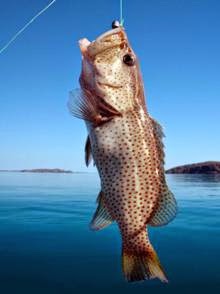
Her example of a continuous random variable is the length of fish caught in a fishing contest. Now I know I am just Joe Schmuck, with almost no knowledge of statistics, and even less credentials, but that statement, to be charitable, is just silly. I am sure if I were to challenge Dr Rumsey to a public debate on this, she would crucify me, as she would be well prepared with mathematical theorems backed by centuries of publications in peer reviewed journals, but that doesn't change the fact that she is now qualified to write speeches for George W.
Any half-wit, unencumbered by accepted truisms in statistics, can tell you that her statement is utter nonsense. This here fish I have on the end of my fishing line happens to be X cm long, but Dr Rumsey tells me there is a zero chance of that fish existing, so it can't exist, so that must be some very unusual crocodile wiggling on the end of my line. The other obviously troublesome problem with her statement is that it applies equally to any other length of fish you'd like to consider, so by definition there are no fish at all in that lake, or any other lake for that matter. And if there are no fish, then the population (or sample) size is zero, so there is no mean and no sigma, and Dr Rumsey doesn't have a probability distribution, and thus can't actually say anything about the probability of catching a fish of a certain length – her statement is internally inconsistent.

I've used the concept infinity in my previous life as a scientist. I always thought of an infinite value as something that was so big, that if it was any bigger it wouldn't make any difference. I get it – it can be useful. Integrating from -∞ to ∞ can make for some clean, pretty math. Modern physics relies heavily on mind-bending mathematics (the race is on to add more dimensions to M-theory), and so infinity can be a useful tool for modelling the real world.
Things start to go haywire when you begin to think of infinity, literally, as a real thing. Some physicists have suggested that the universe is infinite, and they're not invoking some trickery like warping space-time so that a traveller on a space ship would travel in a big circle around the universe and eventually arrive back where they started – they mean that the extent of the universe is truly without bound. I know that at very large and very small scales, human intuition GPF's, but “say what?” I have to ask. Infinite you say? I just can't buy that. A quantum fluctuation on steroids produced the Big Bang (which, interestingly, was silent) and somehow that produced an infinite amount of space and matter? No way.

Following this to its logical (illogical?) conclusion, leads to all sorts of problems. An infinite universe implies an infinite number of stars, an infinite number of planets earths, and an infinite number Barack Obamas. You see, if the astronomical bodies of the universe formed essentially at random (which all the evidence supports), and you have an infinite number of planets, that means an infinite number of them will be exactly like earth. No all of them mind you, but still an infinite number. Thinking about that idea alone is enough to make you bleed through your eyes – take the infinite number of planets and divide them by 26 wappagazillion, and you're left with ... an infinite number of planets. So even though planets exactly like earth are extremely rare, there are just as many earths as all the rest of the planets combined: infinitely many. I would have thought that simple observation was enough for some philosopher to disprove infinity once and for all [maybe one has – I didn't check – but this Schmuck's blog is about writing, not solving great mathematical problems]. But I'm getting side tracked yet again. So we've got an infinite number of planets exactly like earth, and on each one we've got life evolving randomly, and since we've got an infinite number of them ... well the result in a infinite number of earths with Barack Obama and Vlad Putin getting their knickers in a knot over a small, impoverished country in eastern Europe, and making life hell for millions (a small price to pay for their ego games, and darn if I can't stay on topic today). So, there are an infinite number of Joe Schmucks out there too. How can anyone really believe that?

The flaw in Dr Rumsey's statement is that she has fallen into the infinity trap. Her implicit assumption is that there are infinitely many possible fish lengths. If you accept this, then it follows that the width of the area under her probability curve for any given fish length is infinitely small (a pompous way of say zero), and so the “area under the curve” for a given fish length is zero, and so is the probability of me having a fish on the end of my line. It is all so sensible when you think about it like this, but it is also a pile of rubbish.

To have an infinitely large number of fish lengths, the smallest possible difference in fish size must be infinitely small, but in real life that just isn't so. Fish are made of molecules – proteins and fats and those sorts of things – and molecules are made of atoms. Atoms are only so small – free quarks don't exist in nature, and that includes fish bodies. I am guessing that the smallest possible difference in the size of two fish can be no smaller than the size of an atom, and probably larger than that. So the smallest difference in fish lengths may be really, really small, but it isn't zero.

But remember, we are talking about the lengths of all fish caught in a fishing contest. The lengths of the fish need to be measured, and in practice, it's not possible to measure the length of a real fish to anything like atomic scales. Think about it, we need some repeatable process so we can reliably say what the length of a given fish is, and attempting to measure the length down to scales where Brownian motion and Heisenberg uncertainty are important just isn't going to generate reliable, repeatable results – not to mention a slimy, floppy (or flopping if it is freshly caught) fish just doesn't lend itself to atomic precision length measurements. Her probability distribution is a distribution of actual measurements, not hypothetical measurements, and we can't measure the length of something with infinite precision – this is not dependent on our technology, it just isn't physically possible. In practice, I think you'd be doing pretty well to manage +/- 0.1 mm, in which case the width of the area under the curve becomes small, but in some ways a long ways from zero.

Her statement is based on the assumption that the smallest difference in fish lengths is infinitely small and we can measurement with infinite accuracy – both those assumption are wrong because they rely on applying infinity to real life physical things. Her continuous random variable isn't really continuous, and neither is any other you care to dream up.

There is no infinity, and maybe that is a fish on the end of my line after all.

Tuesday, August 26, 2014

Life on the road

It is closing in on two years since we landed in Sydney, and thinking about the last two years gives rise to many questions. Which is harder to believe, that I've been resident of Australia for almost two years, or that I've been homeless for two years. Who do I despise more: Stephen Harper or Tony Abbott? How long until the Australian housing market implodes? How badly does Nobel Prize committee wish they could have Barack Obama's prize back?

We've been on the road for much of the past two years – initially with just a car and a tent, but for the last 16 months, with our vehicle towing a small caravan. “Back home” we were wont to go on road trips, typically of 4-6 weeks length, invariably to the southwest US states in Nelson's rainy seasons (spring and fall), and usually for rock climbing, but once for a ski traverse in the Sierras. When imagining our move to Oz, I drew upon those experiences, and had trouble picturing us travelling about living in a small caravan for more than 6 months, as 6 weeks usually seemed long enough, but here we are, almost two years in, and no end in sight. 
We have had a few months at the mother-in-law's in Sydney as we got our selves settled in the country, and five months house sitting in Cairns, which has really helped stave off the road weariness. But still, I'm surprised at our staying power.

The Podmobile

I think there are a fair number of reasons we're still going strong, but most importantly, our home on the road is certainly an upgrade – we have a much better setup in our “van” than we had with our Boler in Canada:
  1. It is a bit bigger, and we each have our own bed (complete with reading lamp – “pods” we call them, hence the “Podmobile”), and the beds are permanently beds and don't have to be made up into the kitchen table every morning (like in the Boler). 
  2. The Podmobile has a bigger and better fridge, that has a workable freezer even in the heat of Australian summer. 
  3. Our new rig also has excellent 12V LED lighting (partially my work, partially the previous owner's), so the Podmobile is very well lit which is really important during the 12+ hour dark nights.
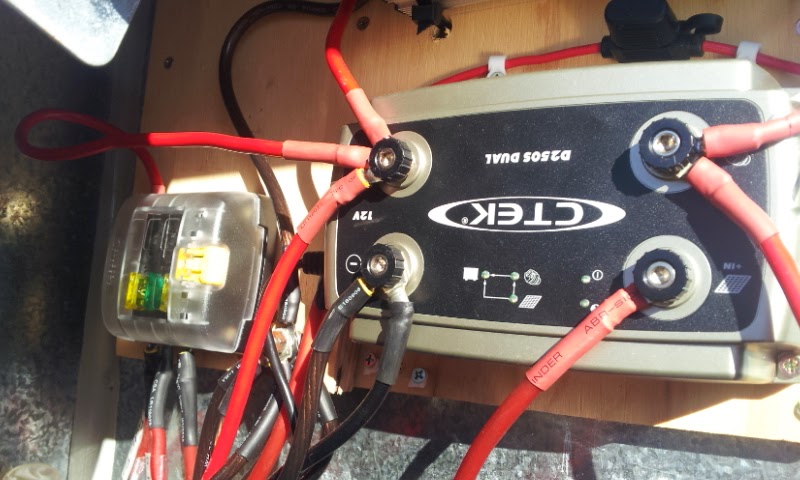
  4. A huge plus are my off-the-grid mods to the van, which mean that so long as we have sun for the photovoltaics (which we almost always do) we generally have as much power as we need to run electronics like MP3 players, cameras, mobile phones, and computers. So long as we have a source of water and food, we can happily live off the grid indefinitely.

The Internet

Even for anti-social, cave-dwelling Luddites like ourselves, connecting to the outside world, at least sporadically, is really important. With a smart phone, a good data plan (half the cost or less compared to Canada), and an in-house tech-head, we are much more connected that we used to be when travelling in the States. Anti-technology extremists that we are, we didn't have a cell phone back then, which made planning trip logistics and communicating with loved ones a chore. Now, when we're in range of a cell tower (sometimes frequently, sometimes only every couple weeks even with my external antenna – it is a big, mostly empty country) a few magic finger swipes turn our mobile phone into a portable WiFi hotspot, and presto our laptops (one each) are connected to the Internet with minimal fuss in the comfort of our pods or sitting at the kitchen table that doubles as an office desk. Whether it is keeping in touch with family, spraying on Crackbook, checking out the weather forecast, downloading eBooks and podcasts, or getting e-brochures for the next national park ... it is now hard to imagine life without a portable Internet connection.

The Climate

The weather here is much more comfortable to be camped out in a small RV than shoulder seasons in the US. The fact that Australia has climatic zones from temperate to tropical, and we move around with the seasons, means we don't wait out rain very often (4 months since the last rain), are generally warm enough to be comfortable, and only rarely have been too hot. Most of the time there is a water source nearby that doesn't freeze over each night, so if shower facilities are lacking we can usually go for a swim and thus it is rare for us to go to bed feeling dirty.

The Lessons Learned

We have also learned a few lessons, things that we need to do, to avoid the dreaded “road weary” burnout:
  1. Don't drive too far each day. Hard core travellers will think we're wastes of skin, but if we can limit our daily time in the vehicle to 4 hours or less (we loathe driving), we are oh so much happier. This sometimes means we take quite a while to travel some not very interesting sections, but for us, it is a very favourable tradeoff indeed, and cuts down on the marriage councillor costs.
  2. Don't try to pack too much into each day. We have a habit of being too literal with the carpé dium thing, and attempt to jam pack each and every day, with not a wasted moment. We used to underestimate how long it takes in an unfamiliar town to get groceries, petrol, and information about our upcoming adventures. We now try to schedule conservatively to avoid the headless chicken dance, and budget in some rest days (something that does not come easily to Wife).
  3. Recognize the early signs of travel burnout, and find some quiet, out of the way spot, to just hang out for a week – something that in the past would have horrified us. Now, mind you, the ideal chill-out spot, needs to have activities, but they needn't be amazing, and they need to be accessible without the use of the vehicle – leaving the vehicle parked is a key part of chill-out week.

The Housing Market

The fact that we don't own a house, and have no idea where in Australia we would like to settle, means that any incipient ideas about ending the road trip and settling down wither on the vine, so to speak. And with housing prices in Oz in a horrific bubble, the house accountant thinks it is a good thing we're not wanting to settle down yet. When we moved here, the $AUD was worth $CDN1.2 and housing prices were in the stratosphere; I said that when the Aussie buck dropped to 80¢ Canadian and housing prices fell 30%, we'd buy a house. The dollar is half way there, but housing is still hanging in. I figger that China will blow up within a few years and Australia's mineral export economy will get monkey-hammered and we'll get our buying opportunity.
We won't want to live this way forever, but all in all, we are just way more comfortable on the road here, and without a home to go back to (or look after), we seem to be happy to just keep on exploring the island. Keep on keeping on ...

Friday, August 15, 2014

The 10 Year Itch

In the fall of 2011, Wife and I decided it would be a good idea to move to Australia. Well, truthfully, she finally caved after a decade of me pleading, but I digress. A year later, I had been granted permanent Australian residence, we'd sold our lovely home and acreage near Nelson, had disposed of most of our worldly possessions, and up-and-moved down under.

Here is something I'll tell you for free: moving countries is a major hassle. I way underestimated what was involved. The 90 page residency application was only the beginning. There was also the need to acquire drivers licenses, health care insurance, an automobile, etc. Everything is just different enough to be really confusing – two years on and I still haven't really figured out the Australian health care system.

On the Nadgee Howe

And then there is banking and investing. Oh my, what fun it was dealing with those. In Australia, your credit worthiness is based on your income, not your assets. If, like me, you've just arrived in country (and thus have no Australian income history), you could literally be Bill Gates (literally!), and you could not, for love nor money, get a credit card. No chance. Nada. Without a credit card or a credit rating, just try getting a mobile phone. Good luck to you – you'll need it. And despite their promises to the contrary, once I left Canada, TD Canada/TD Waterhouse has made my life a living hell – OK, maybe I am prone to a bit of exaggeration, but calling my experience a huge (and expensive) pain in the arse would understate the fun. And don't get me started on dealing with Revenue Canada.

So then why the heck did we do it? My favourite flippant answer is “because I couldn't bear living under Stephen Harper's rule.” I wish I had that sort of conviction to my political opinions, but sadly I don't, and if I did, I suppose I would have stayed in the Frozen North to fight the good fight for the end of his tyrannical rule, rather than gone paddling on the Great Barrier Reef. But my hedonistic nature aside, things haven't worked out so well in that regard anyway, as Harper's evil brother, Tony Abbott, was recently elected as Australian PM. Abbott, the ALP, and their neo-con agenda is just so deja vu all over again, that I sometimes feel like I'm stuck in a bad dream. Canada was too stupid to learn from the mistakes of the Americans, so I don't know why I imagined the Aussie's would be any different.

Burrawarra Point, NSW
The truth is, I seem to be a sort of 10-year guy. As Sandy is Australian by birth, most folk are surprised to learn that I was the one who was agitating to move to the Antipodes, but it is true. After ten years of living in the same place and doing basically the same stuff, I am bored and want something different. Something to stir things up a bit, and get me out of my comfort zone. We'd been in Nelson for going on 11 years ...

OK, so I wanted a change, but why Oz? Why not Saskatchewan? Or the Maritimes? I have lived my whole life, up until 2012, in Canada, and since my mid-20s have been fanatical about mountaineering, rock climbing, and backcountry ski touring. This basically means I have been freezing cold most of my adult life, and the rest of the time I was only moderately cold, wet, and miserable. As they say, in Canada there are 10 months of winter and then 2 months of crappy skiing. To me, Australia seemed like a fairy tale land: the sun always shines, the air is always warm, the beaches are amazing, and the landscapes are stunning (mostly true, not as true as I thought, true, true). Not that Canada is such a bad place – it isn't, it is a wonderful place, and there are many things I love about the place. But Oz just seemed so different (and comfortable) as an outdoor playground – different forests, different (and whacky!) creatures, and different outdoor sports to learn (I'm talking sea kayaking and surfing and the like, not footie and cricket, which the Aussie's are mad about). What's not to like?

That bloody itch!

We've been in Australia for going on two years now, and it has pretty much been one long, grand adventure. The climate really is a dream compared to Canada. It makes camping and travelling – which we've been doing pretty much continuously – so much more pleasant. The beaches ... I don't think I'll ever get tired of the beaches ... walking barefoot on an endless perfect sand beach with the surf rolling in: magical. The warm water, salt and fresh, is lovely – we swam more times in our first month in Oz than 20 years in Canada. And the place is stuffed with truly wonderful places to discover. I find it amazing to think we've driven from the Snowy Mountains to the tropics without leaving the country. I'm old now, so was ready to let mountaineering go as an activity, but sea kayaking Australia's beautiful coastlines is a perfect replacement.

In some ways Australia has been very much like I had imagined, and other ways it has been very different, but overall, I am loving the place.

Hinchinbrook

And the ten year thing? I highly recommend it – life is too short to get stuck in a rut, and getting stuck is so easy.